Simona Levi (Founder) | Advocacy
Theatre director, playwright, technopolitical strategist, independent consultant, and activist
, in 2017 Rolling Stone magazine selected Simona Levi as one of the 25 people in the world shaping the future.
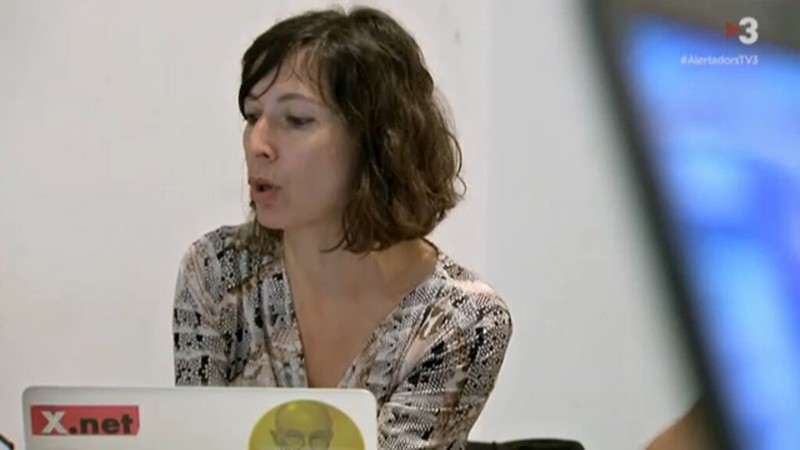
In 2021, David Fernández de Castro and Bettina Walter produced the documentary L’excletxa about her work in the field of democratic and digital rights, broadcast by Catalan public television as part of the Sense Ficció series.
Since 2018, she has designed and co-directed the Postgraduate Course in Technopolitics and Rights in the Digital Age, first at Universitat Pompeu Fabra and later at the University of Barcelona.
As an activist, in recent years she has focused on renewing democracy in the digital age and on free culture, as well as on the strategic use of digital tools for organisation, communication, democratic action, and the fight against state corruption.
She is and has been a media commentator and advisor to countless civic organisations and institutions, such as the Working Group on European Digital Sovereignty and Common Digital Tools and Infrastructures of the Directorate-General for Strategic Planning of the Ministry for Digital Transformation of the Government of Spain; the Spanish Government’s Secretariat of State for Digitalisation and Artificial Intelligence; the Directorate for Digital Society and the Directorate-General for Digital Administration of the Government of Catalonia (in both institutions she was a member of the advisory group for drafting the Charter of Digital Rights); the Department of Justice of the Government of Catalonia on the Whistleblower Protection Law; the Cultural Rights Plan of the Ministry of Culture; Bithabitat – Urban Innovation Platform of Barcelona City Council; the i2CAT Foundation’s Internet and Digital Innovation Research Centre; the Human Rights Advisory Council of the Government of Catalonia; and the European Public Mosaic – Open Journal on Public Service of the School of Public Administration of Catalonia, on issues within her fields of action such as digital rights and the renewal of democracy in the current era; free culture; freedom of expression; the fight against systemic disinformation; and the strategic use of digital tools for organisation, communication, democratic action, and the fight against abuses of state power.
She has also made numerous parliamentary appearances at national and international level, including the Ministerial Forum for Creative Europe during the Czech Presidency of the European Union in 2009; an appearance before the Culture Committee of the Spanish Congress of Deputies in 2010; and before the Anti-Corruption Committee (2016) and the Transparency Committee (2019) of the Parliament of Catalonia.
Activist
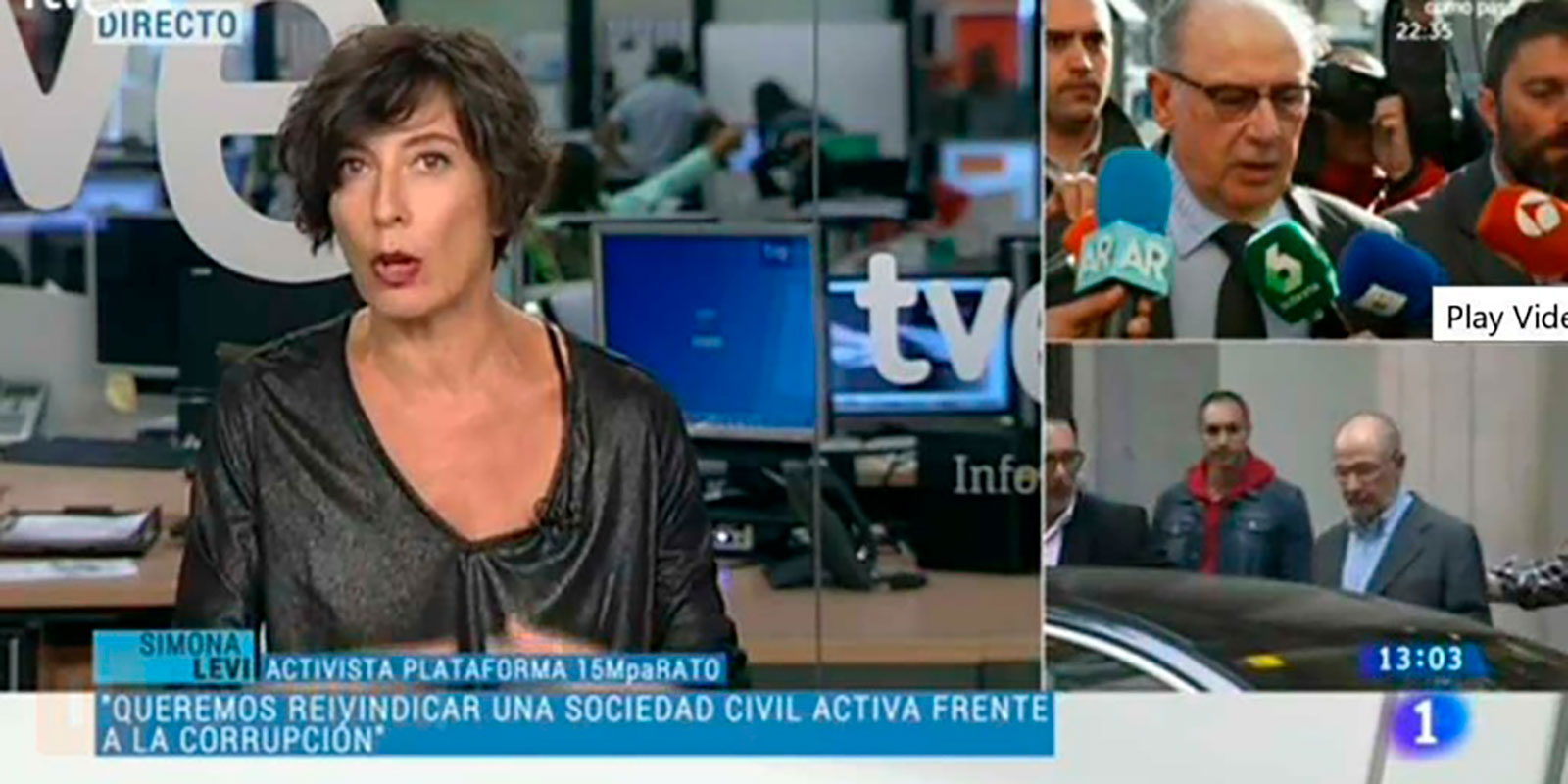
As an activist, in recent years she has focused on free culture, digital democracy, and the strategic use of digital tools for organisation, technopolitical communication, collective action, the fight against state corruption, and the renewal of democracy. An initiator of projects such as Xnet and 15MPARATO, she designs citizen-led tools to expose corruption and the political accountability behind systemic abuses.
She was an active figure in the 15M movement from Barcelona and in movements for the right to housing (VdeVivienda), among others.
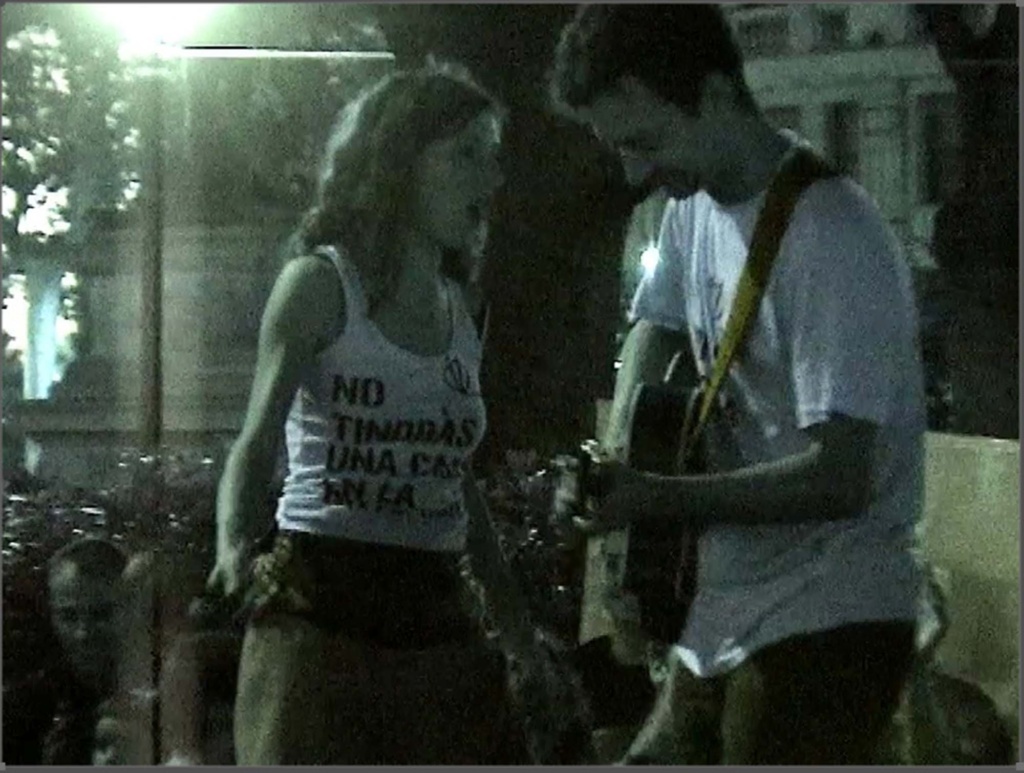
V de Vivienda
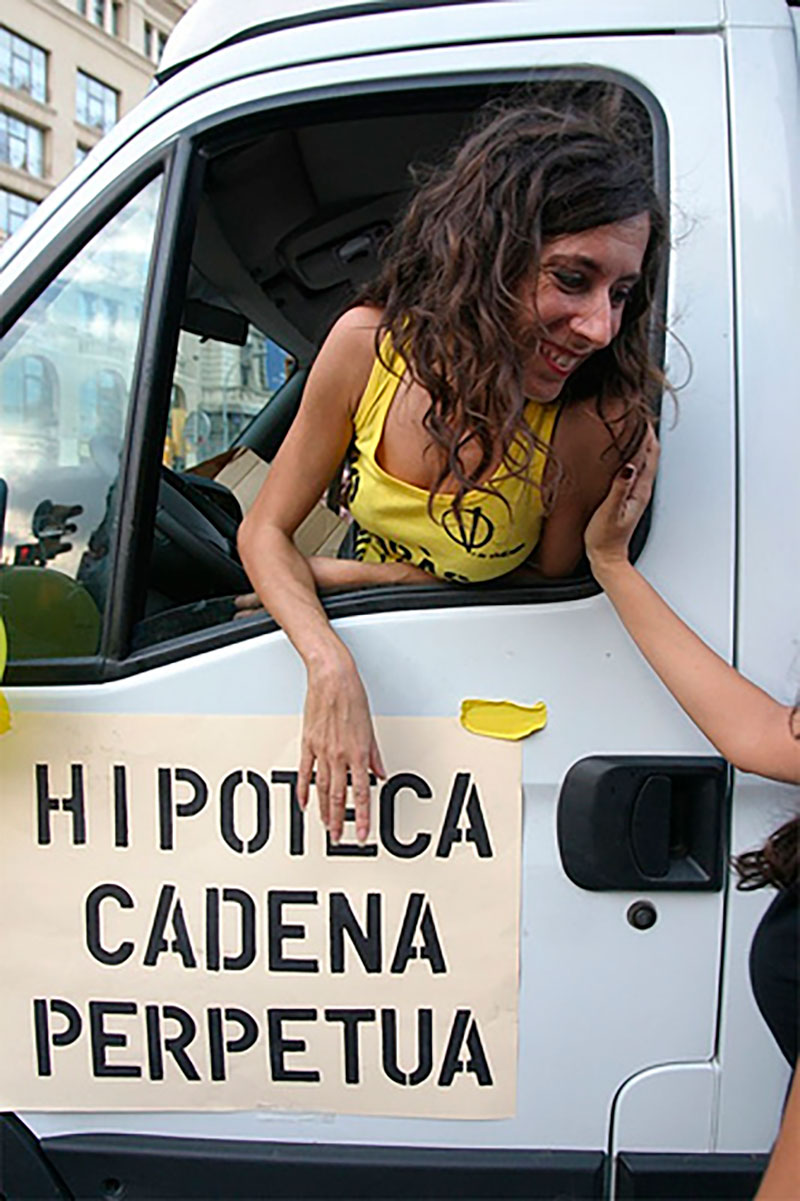
simona-levi-activista-v-vivienda
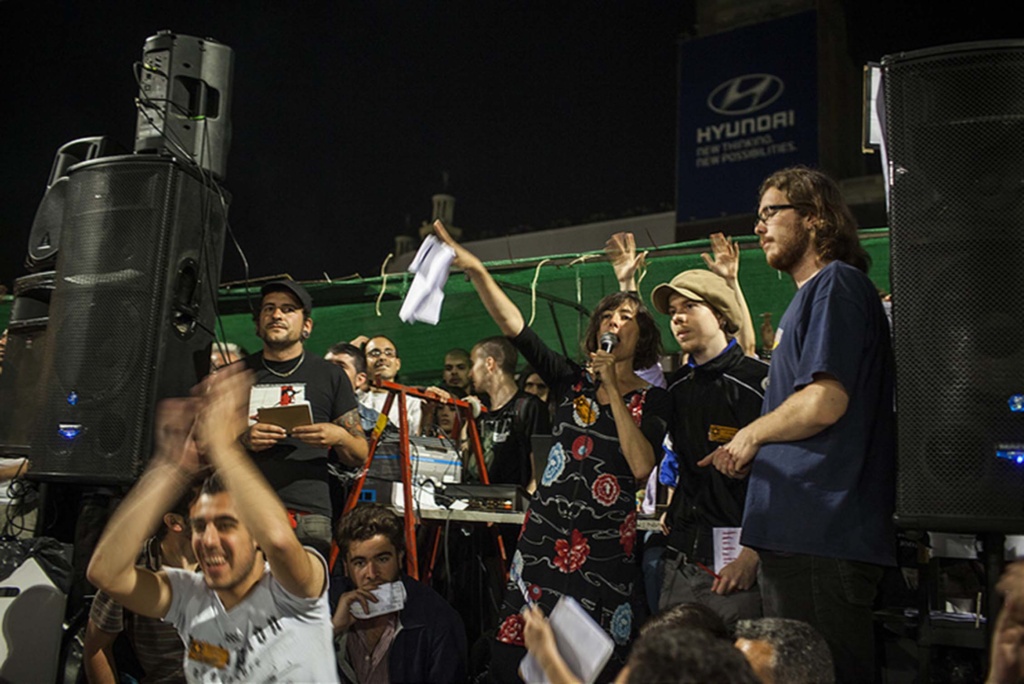
15M Barcelona
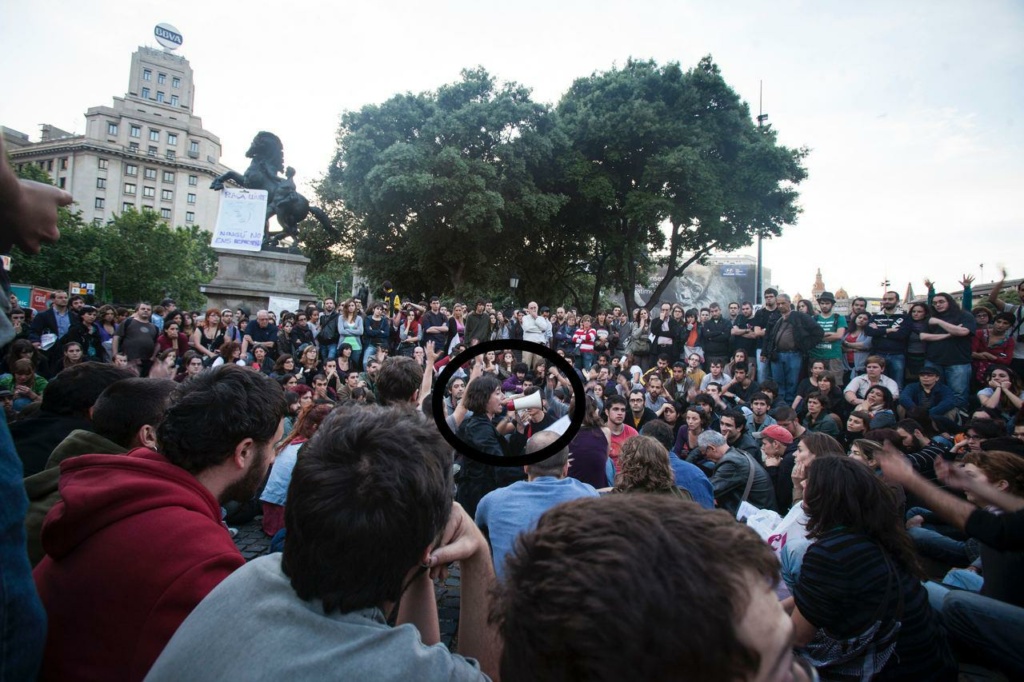
15M Barcelona. Fotografía de Edu Bayer
Activist. Creation of action-oriented tools
Xnet (formerly EXGAE): in 2008 she promoted the founding of the EXGAE project, involving other activists, academics, geeks, and people affected by the abuses of the Spanish Society of Authors and other copyright management organisations.
EXGAE proposed alternative models for cultural dissemination, copyright management, the defence of the Internet, and democracy in the digital age. In 2010, EXGAE changed its name to Xnet due to the lack of a sense of humour on the part of the SGAE, which threatened to sue for trademark and patent infringement. Since then, Xnet has focused on digital rights, data, and networked democracy (mechanisms for citizen participation and oversight of power and institutions); the defence of a free and neutral Internet; the free circulation of culture, knowledge, and information; the defence of citizen journalism and the right to know, inform, and be informed; legal, technical, and communicative action against corruption; and technopolitics understood as practice and action on the network for empowerment, justice, and social transformation.
Since its founding, Simona Levi has coordinated the project.
Featured (updated in 2022):
Digital rights and digitalisation that respects human rights
In 2021, at the request of the President of the European Parliament, David Sassoli, Levi directed a “Reflection paper” published by the European Parliament Research Service at the Publications Office of the European Union, entitled «Proposal for Sovereign and Democratic Digitalisation of Europe». This work was produced as a result of a dialogue session between David Sassoli, President of the European Parliament, Simona Levi, U. von der Leyen, President of the European Commission, former President R. Prodi, and T. Berners-Lee, inventor of the Web. The session, entitled “Access to the Internet: a new human right”, was broadcast live by the European Parliament.
The project includes concrete actions on which Levi is currently working.
Since 2019, Levi has designed and directed the Democratic Digitalisation of Education Plan together with families, free software companies, and promoting educational centres.
The Plan involves the creation of a comprehensive, auditable, agile, and interoperable digital tool called DD to replace proprietary Big Tech tools in all educational centre activities, as well as a programme to reform the education system for digital training. So far, the Plan has resulted in:
- The development of the DD tool and its implementation in 11 schools in the city of Barcelona (since 2021), in collaboration with the City Council’s Directorate for Democratic Innovation and the City’s Education Consortium, and
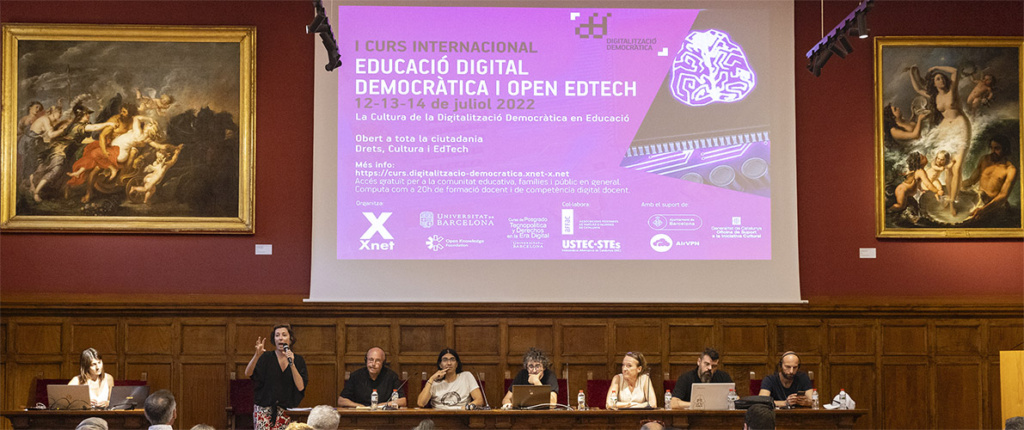
- The organisation of the 1st International Course on Democratic Digital Education and Open Edtech (2022), directed by Levi and recognised as 20 hours of teacher training by the Department of Education of the Government of Catalonia. This international conference has produced policy recommendations and a permanent international working group.
From 2019 to 2023, she contributed to the Gavius project within the European Union’s Urban Innovative Actions (UIA) programme, in the field of digital rights and the ethical use of technology by local institutions in the area of social services (cities of Gavà and Mataró, together with the Open Administration of Catalonia and the Polytechnic University of Catalonia).
Specifically, she works on identification, freedom of choice, and participation in the digital sphere, as well as digital rights in the field of artificial intelligence applied by Public Administration.
Since 2018, Levi has worked intensively on many aspects of the correct implementation of the European Union’s General Data Protection Regulation, which protects online privacy.
She coordinates the related actions and the drafting of Xnet’s report and legislative proposals on Privacy, Data Protection vs Institutionalised Abuses. This project has led to various actions before European and national bodies in the areas of elections and abuses involving electoral rolls; preservation of memory; the clash between administrative law and transparency law with the spirit of data protection regulation; and the violation of rights resulting from privatisation affecting self-employed workers.
On online freedom of expression and its relationship with disinformation in the digital age
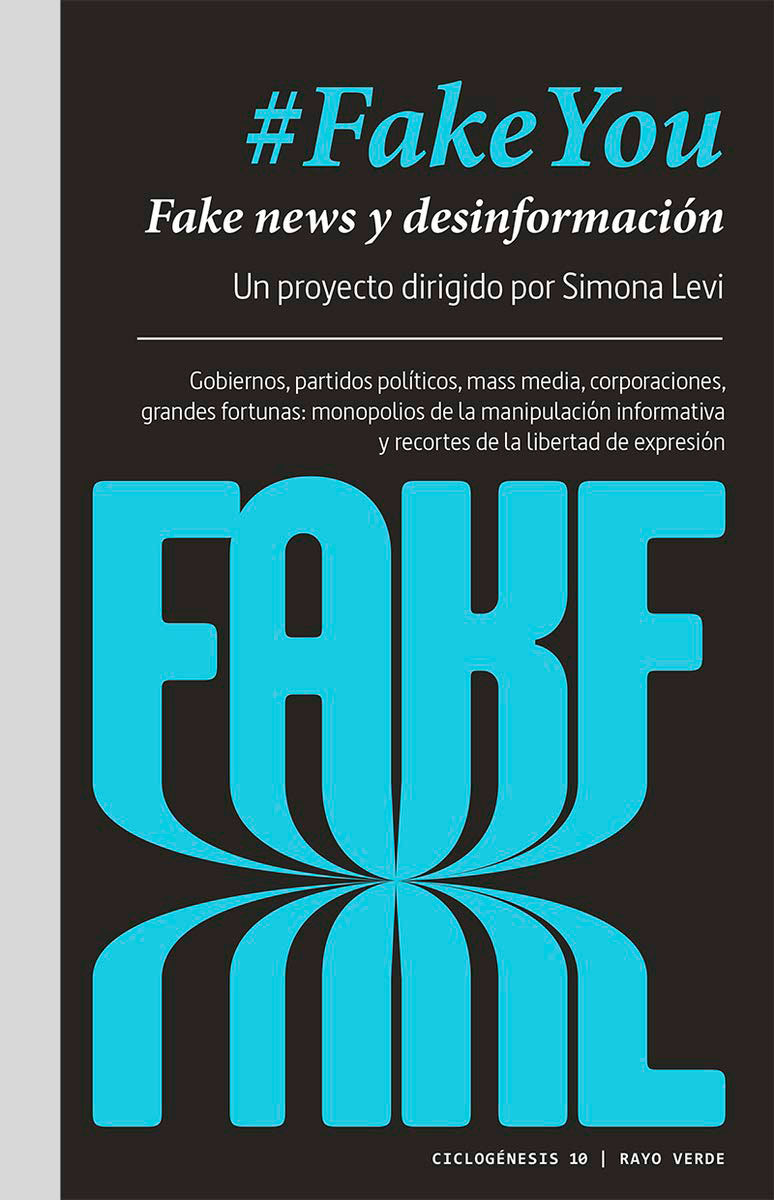
In 2018, she coordinated the report «#FakeYou: Governments, political parties, media, corporations, great fortunes: monopolies of information manipulation and threats to freedom of expression», which was turned into a book in 2020—with two editions—and adapted for a children’s audience in 2021 (translated into Portuguese).
In 2020, she designed the policy recommendations based on the report «#FakeYou: governments, political parties, media, corporations, great fortunes: monopolies of information manipulation and threats to freedom of expression». This work led to numerous interventions in the fields of freedom of expression, disinformation, and hate speech.
On access to culture, information, and knowledge in the digital age
Since 2008, she has promoted free licences to improve access to culture, information, and knowledge in the digital age, as well as various proposals for legislative reform in the fields of Open Data, open source, and open access/open science. In 2011, she appeared on Spanish Television in the documentary «Copiad, malditos», directed by Stéphane M. Grueso. In 2012, she coordinated the European project «Creativity: innovative models of production and access». In 2013, she facilitated the application of the first Creative Commons licence for a documentary on Catalan public television (*No-Res*).
She has generated several large-scale initiatives in this field:
- In 2010, she promoted the creation of Red-Sostenible (mentioned in the Cablegate releases published by Wikileaks).
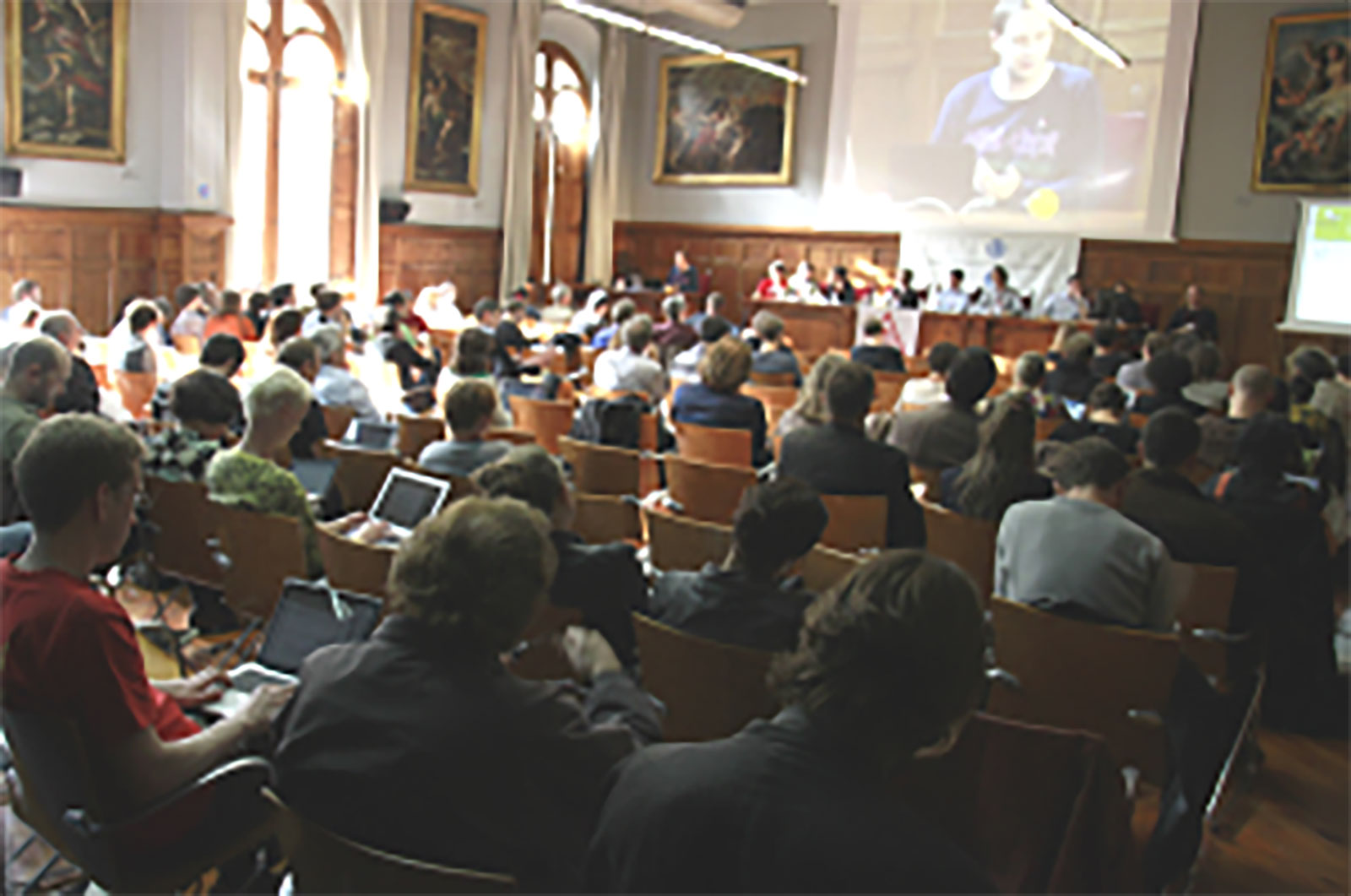
- From 2009 to 2015, she led and designed the FCForum, an international observatory of democratic rights in the digital age: a public policy-design event with an international network of 150 specialists over seven editions, with corresponding legislative recommendations.
- From 2008 to 2013, she created the OXcars (six editions), the largest free culture event in Europe. Capacity: 2,000 people.
- In 2008, she led the repository of tools and advice for the public.
Democratic innovation and the fight against (corruption and) systemic abuses, and for institutional integrity
An area in which she has been working since 2012, when she founded the citizen initiative that drove the Bankia case and exposed the black cards, leading to the conviction (2018) of 65 politicians and bankers, including the former Minister of Economy and former President of the International Monetary Fund, and enabling the return to those affected of shares and preferred stock worth nearly €9 billion.
A pioneer in whistleblower protection and secure anonymous reporting channels, in 2019 she submitted to the Spanish Congress and the Parliament of Catalonia the first transposition of the European Directive for the protection of whistleblowers and informants, and created a template for transposition that could be used by other countries.
In 2018, she proposed a DIY system for the registration of legislative bills for the Spanish Congress of Deputies and parliaments.
A specialist in strategic litigation for social transformation, since 2018 she has worked intensively to improve national and European legislation on collective actions and SLAPPs.
In 2017, she promoted and launched the first institutional, anonymous, and secure channel for reporting wrongdoing based on Globaleaks at Barcelona City Council. This prototype was subsequently replicated in many other public and private institutions (currently more than 10). She contributed to amendments to the European whistleblower directive.
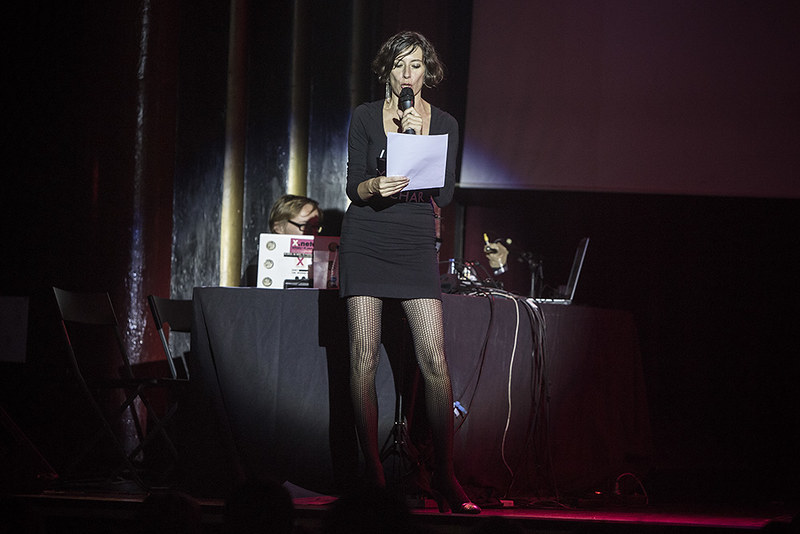
In 2016–2017, her play «Hazte banquero», about the Bankia case and how to fight corruption using digital tools, written with Sergio Salgado, reached 10,000 spectators.
In 2015, the public disclosure and scandal of the *Blesa Emails* took place, exposing the black cards.
In 2015, she founded the Citizen Groups Against Corruption at both state and Catalonia level. Opening of Xnet’s anonymous reporting channel for irregularities. Xnet had co-founded Fíltrala the previous year.
Tools developed with Xnet
DEMOCRATIC DIGITALISATION
Proposal for a Sovereign and Democratic Digitalisation of Europe
Report commissioned by the Presidency of the European Parliament for an inclusive digitalisation that respects fundamental rights. Building on the concrete actions coordinated by Levi in the field of education, lines of action are designed and implemented, along with policy and legislative recommendations.
Democratic Digitalisation Plan in the field of education and DD
Design and piloting of infrastructures for public services with citizens’ digital sovereignty and digital rights at the centre.
International Course/Congress on Democratic Digital Education and Open Edtech
To provide analytical tools for educational centres, teachers, the educational community, legislators, and the general public, in order to understand the digital context and culture and to propose the design of pedagogies from an innovative, agile perspective that respects human rights.
FREE CULTURE
OXcars – The largest free culture event of all time: Simona wrote the script and directed the staging of the show, a kind of non-competitive marathon gala held annually from 2008 to 2013 in Barcelona to showcase cultural creation and distribution carried out under the paradigms of free and shared culture and the defence of a neutral Internet. Through samples and references to works from various categories, real legal solutions are presented in a parodic way.
– International Observatory of Democratic Rights in the Digital Age: Simona Levi has been coordinator, programmer, and director of the Free Culture Forum since 2009, an international gathering that brings together organisations and experts in Barcelona to create a global strategic framework and an international coordination structure.
Red Sostenible: She promoted the founding of this citizen platform created in January 2010, which became one of the main coordinating bodies against the Sinde Law.
It was a national network for coordination and intervention, bringing together organisations of internet users, bloggers and journalists, experts in digital communication technologies, creators, lawyers specialising in digital and copyright law, producer collectives, businesspeople, and user organisations.
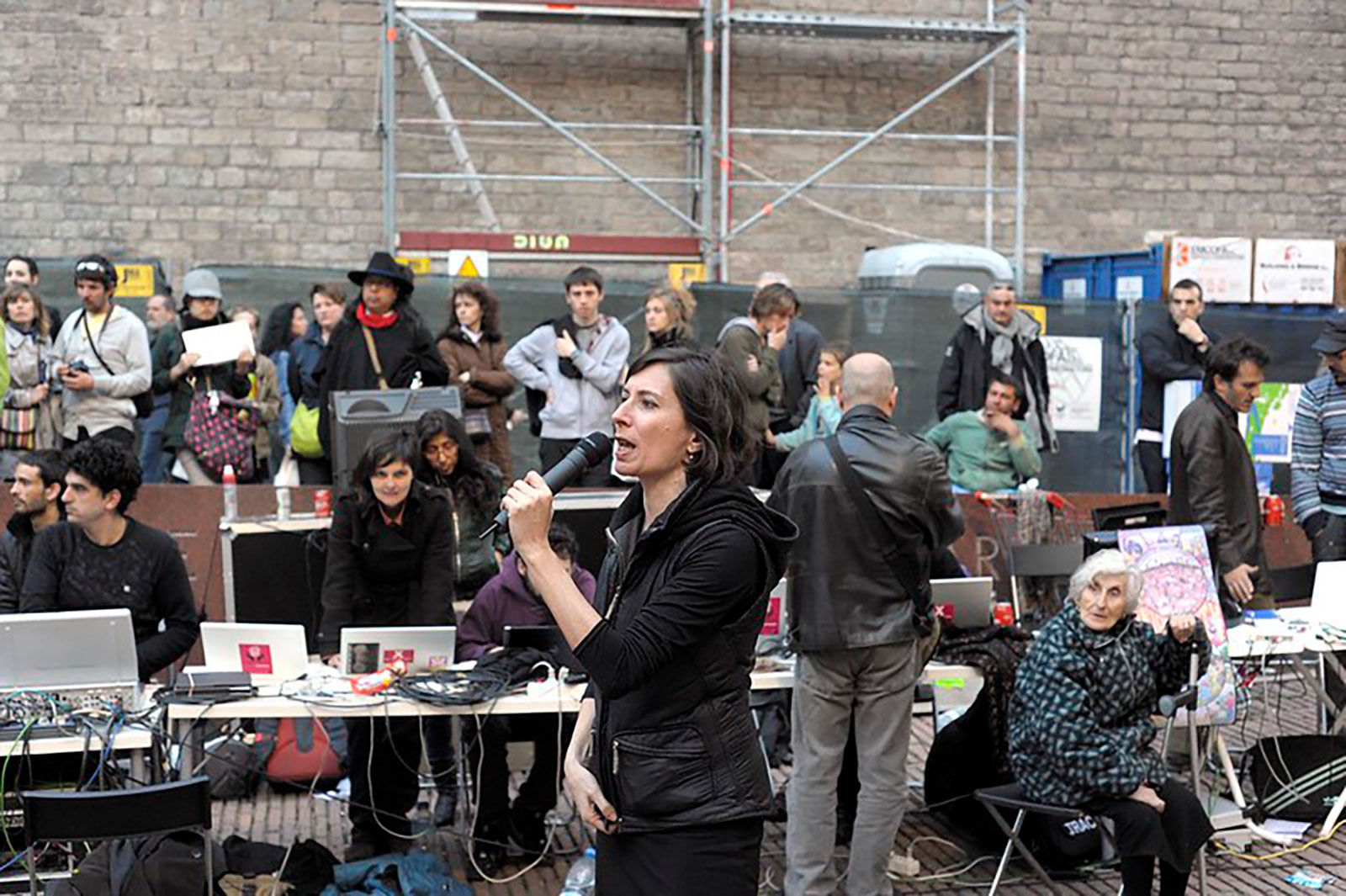
(D’) Evolution Summit, citizen summit:
She designed and directed this large-scale street action, which served as a counter-information point during the meeting of European Community Ministers of Culture, held in Barcelona within the framework of the Spanish Presidency of the European Union.
Free Culture Forum
(D’) Evolution Summit
DEMOCRATIC REGENERATION
15MPARATO: Simona spearheaded the citizen campaign that in 2012 opened what is now known as the Bankia case.
Citizen Groups Against Corruption at state and Catalonia level: coordination of collaboration among groups and individuals already active in anti-corruption efforts within an active, stable, coordinated, and collaborative network against corruption.
Aritmetica20N: For the 2011 general elections, she promoted and co-created the anonymous Aritmetica20N tool.
Politics is about ideas; elections are calculations. A calculation table designed to break the bipartisanship that had dominated the electoral space until then. The table received 600,000 visits in five days and became a significant mechanism in those elections.
Partido X: initiator of the first party born from a group of people aligned with the 15M movement and free culture movements. This experimental anti-party is a unique prototype—non-ideological, based on logic and methodology—and advocates for a model of democracy monitored and participated in by citizens, harnessing the political potential of digital communication tools.
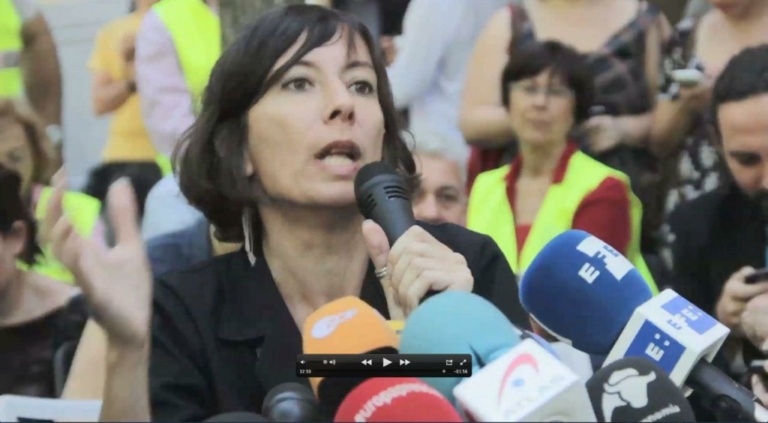
15MPARATO - Fotografía de Edu Bayer
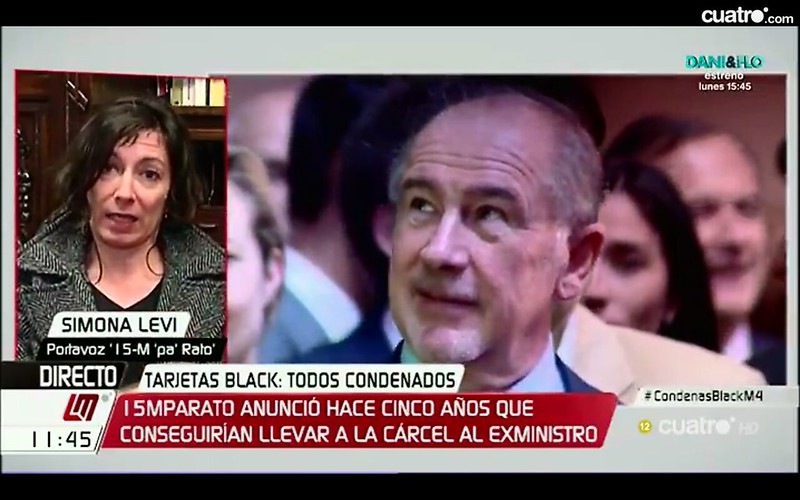
15MPARATO
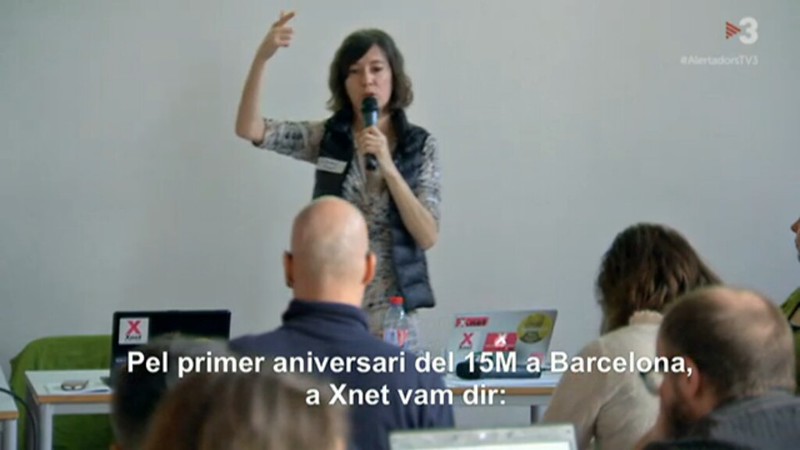
15MPARATO
Publications, research, lectures, teaching, consultancy
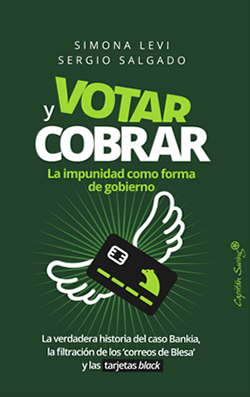
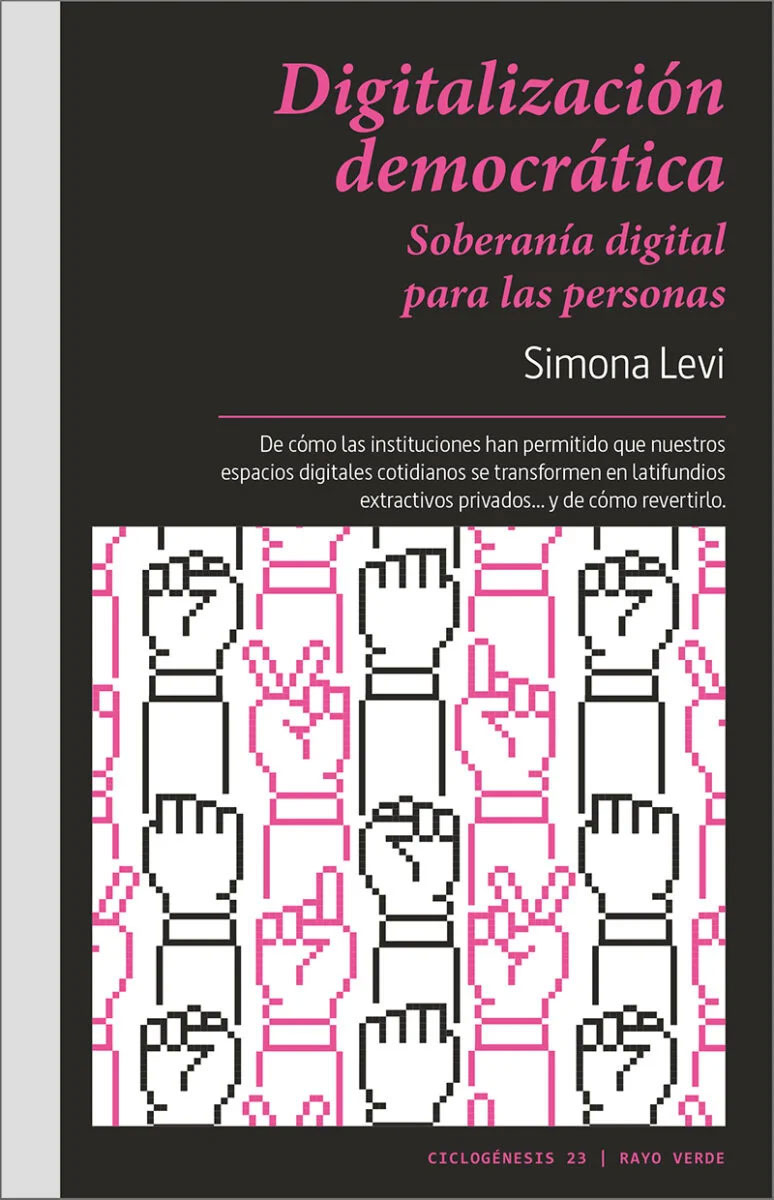
She is the author of several books, among which we highlight «Democratic Digitalisation. Digital Sovereignty for the People» (Rayo Verde, 2024); «Fake You – An Activist’s Guide to Defeating Disinformation – Don’t blame the people, don’t blame the Internet. Blame the power» (Xnet, 2024); «#FakeYou — Fake News and Disinformation – Governments, political parties, mass media, corporations, great fortunes: monopolies of information manipulation and restrictions on freedom of expression» (Rayo Verde, 2019); «Vote and Get Paid. Impunity as a Form of Government» (Capitán Swing, 2017); “Technopolitics, the Internet and r-evolutions” and “Digital Free Culture – Basic Notions to Defend What Belongs to Everyone”, the latter two published in 2012 by Icaria.
She gives lectures, teaches, and provides consultancy in Spanish and Catalan, English, French, and Italian in a wide range of venues, including:
European Parliament, Columbia University, Universitat Pompeu Fabra, Goldsmiths University of London, London School of Economics, Committees of the European Parliament, Committees of the Parliament of Catalonia, Committees of the Spanish Parliament, EU Digital Agenda Committee, EU Internal Market Committee, EU Committee on Culture and Education, OSCE (Organization for Security and Co-operation in Europe), Bangor University of London, Hertie School of Governance (Berlin), Office for Transparency of Barcelona City Council, University of Barcelona, King’s College London, Universitat Oberta de Catalunya, Autonomous University of Barcelona, Complutense University of Madrid, University of Alicante, Pablo de Olavide University of Seville, Barcelona IGOP – Summer University, University of Engineering of Évry, Ars Electronica, Embassy of Brazil, The Journalism Value Project - EU, Wiener Rathaus, Fira Literal, Grup de treball de Bon Govern / XGO, Eurocadres, Basque Parliament Commission, DHub Disseny Hub, Fundació Catalunya Europa, University of Valencia, Mozilla Festival, Mobile Week Barcelona, Biennal de Pensament, EU Network of Corporate Observatories, esLibre, CIDOB, BIT Habitat, Université Paris-Est Créteil, Barcelona Municipal Education Council, Delegation of the Government of Catalonia to Brussels, Fundació Surt, Teatro del Barrio, IMPACTE! Festival de Cinema i DH de Catalunya, Technical Office for Participation for Local Governments of the Barcelona Provincial Council, Digital Future Society, Rosa-Luxemburg-Stiftung, Coppieters Foundation, PEN Argentina Centre, Annual Open Knowledge Conference, IETM Annual Meeting, OuiShare Fest, Reina Sofía Museum, The Logan–CIJ Symposium, Transmediale Festival, Internet Freedom Festival, Cadesyc, Bertolt Brecht House in Montevideo, Communia Workshop in Luxembourg, Buenos Aires Creative Commons Film Festival, Circumvention, Getafe Negro, Economies of the Commons, Primavera Sound, Rototom Festival, Institut del Teatre of Barcelona, Circolo degli Artisti of Milan, FiraTàrrega Postgraduate Programme in Performing Arts, Action Europe, Right International Spain, DSI Advisory Group, Museum of the History of Catalonia, Museum of Contemporary Art of Castile and León, Casa Invisible of Málaga, European University Institute of Florence, Faculty of Communication and Journalism of Málaga, Circolo Arci of Rome, International Institute for Education and Research of Amsterdam, BAU Barcelona, Taller de Músics, Attac Austria, Attac Barcelona, CUP Communication Training Days, Les Verts Européens, Traficantes de Sueños, MediaLab Prado, Confavc, FICOD Festival, #Redada at CCCB, re:publica Europe (Berlin), Relais Culture Europe, Media Squares, LATU – Technology Laboratory of Uruguay, Tramallol Cooperative, Agora99 – European Meeting on Debt, Rights and Democracy, Faculty of Computer Science of Barcelona, Institute of Network Cultures, Fòrum Indigestió, Virus Publishing House, Francesc Ferrer i Guàrdia Foundation, Association of Women Entrepreneurs of Barcelona, Pantera Rossa of Zaragoza, 4S/EASST, IDHC, Disruption Lab, 1st International Seminar on Metropolitan Transparency, Het Nieuwe Instituut, MACBA…
A current-affairs commentator, she has regularly participated in El matí on Catalunya Ràdio and in A vivir on Cadena SER.
Theatre director, playwright, screenwriter, cultural manager
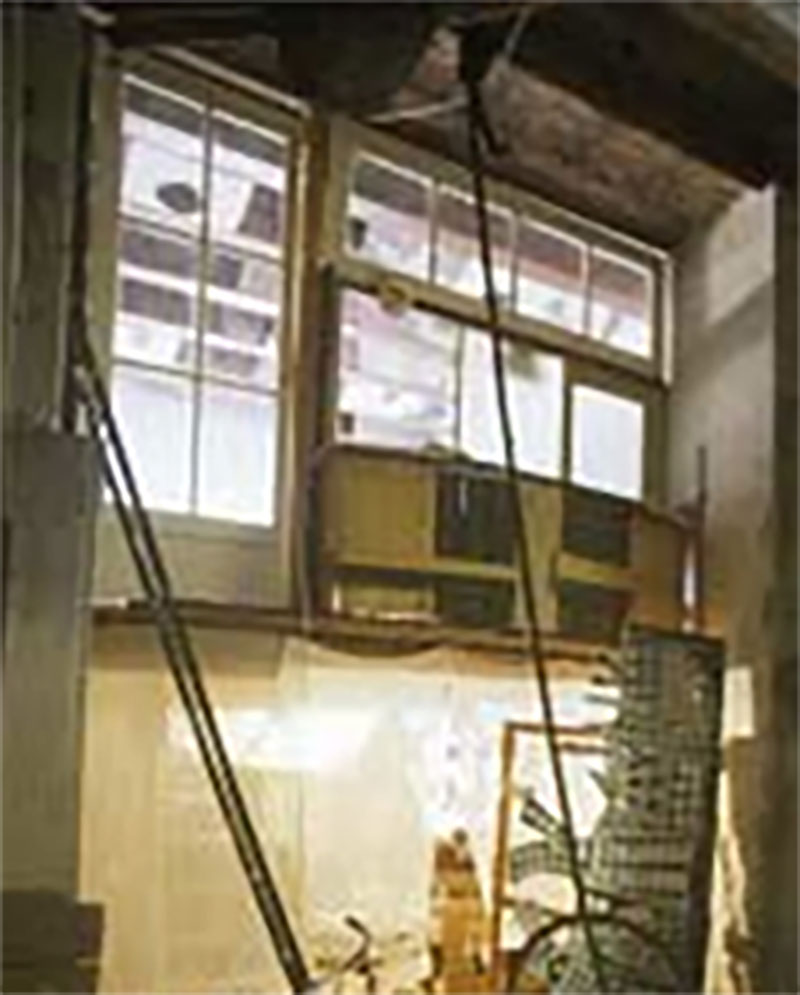
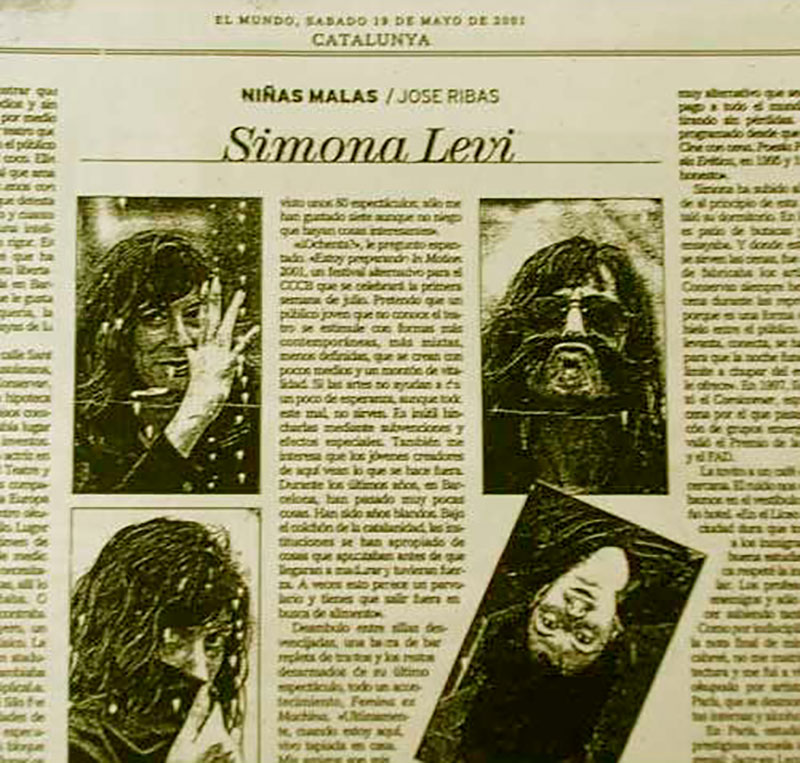
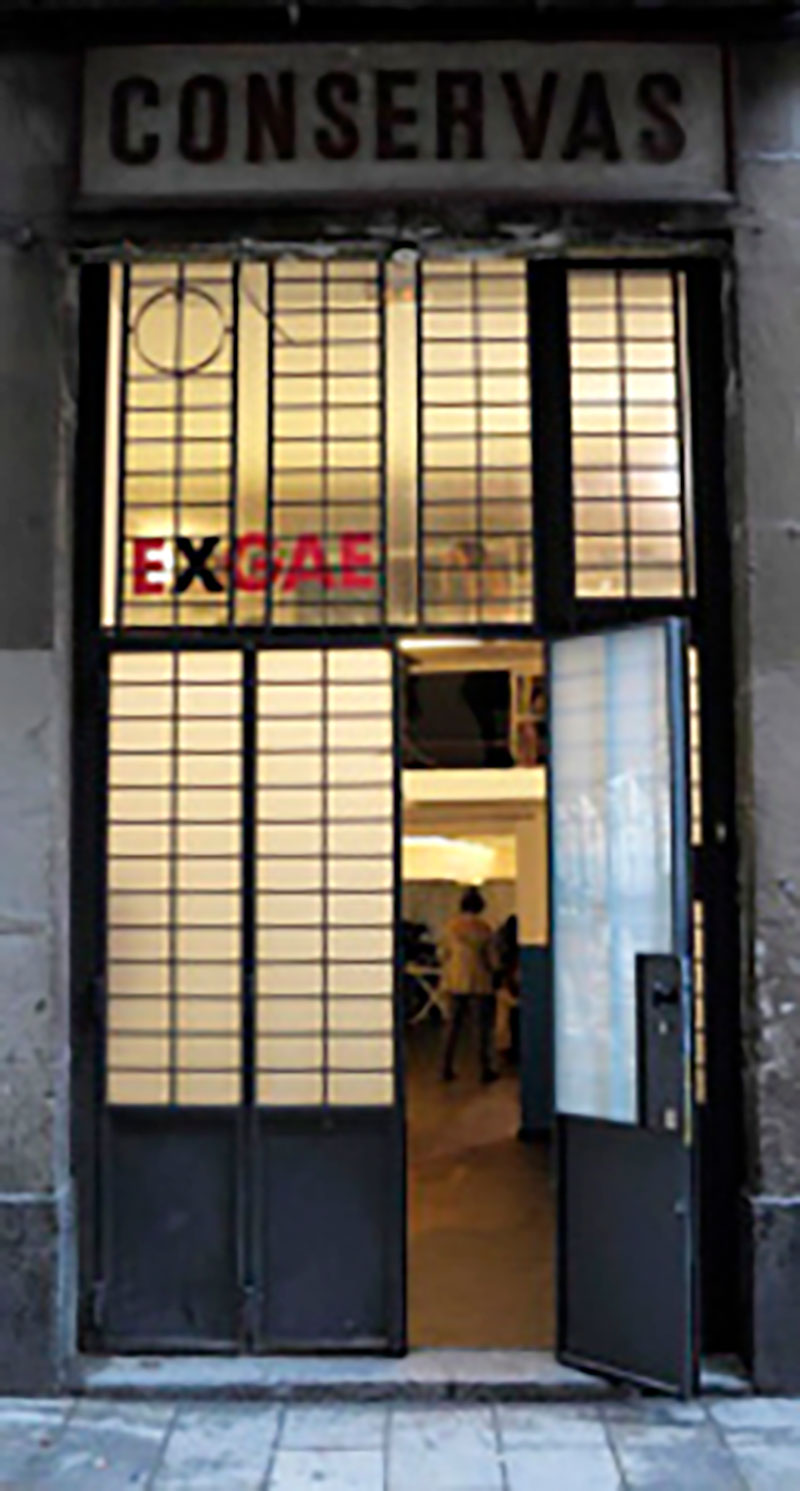
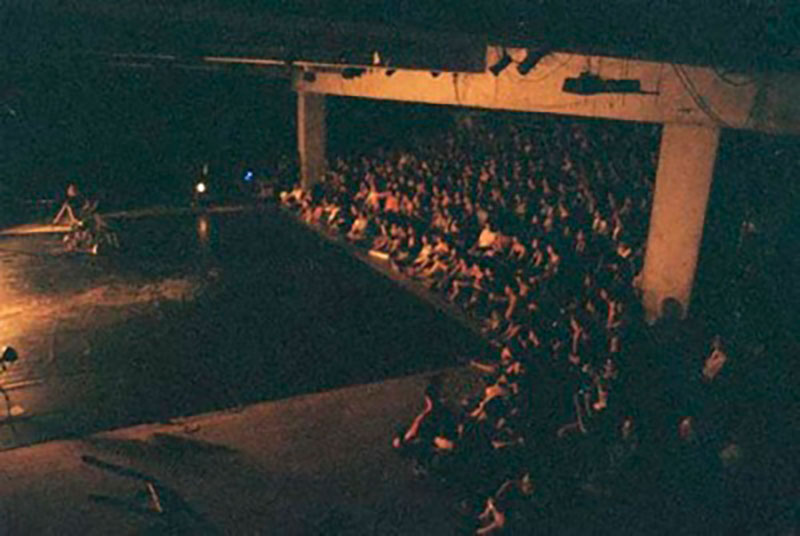
Between 1989 and 1993 she performed with the companies Talking Pictures and Zotal, among others. In 1993, she launched the venue Conservas in Barcelona’s Raval neighbourhood, a space created to promote independent and innovative local performing arts through self-production, programming cycles of total scenic actions that sought the complicity and shared responsibility of the audience.
The scale and reputation achieved by these cycles—always overwhelmed by large audiences—led her to seek venues with greater capacity within cultural institutions.
In 1999, she programmed a cycle of performances at the Mercat de les Flors in Barcelona, and in 2001 she created and directed the Applied Performing Arts festival InnMotion, held at the Barcelona Centre for Contemporary Culture during the city’s Grec Festival, attracting thousands of attendees. InnMotion, which later became biennial, was a nationally, state-wide, and internationally recognised reference festival throughout its five editions.

She began directing in 1989 with the company Ecco Rondo (Lucerne, Switzerland).
In 1999, she founded the Conservas Company, with which she toured throughout Europe for ten years with various productions.
For this company, she writes, directs and, in some cases, creates the stage and audiovisual devices and the lighting design for the following works:
– Advanced Realities 2 (2018–2019)
– Hazte Banquero – Black Cards: Everything They Wanted to Hide from You (2016–2017)
– Advanced Realities (2007–2009)
– 7 Dust, Non Lavoreremo Mai Show (2002–2005)
– Femina Ex Machina (1999–2003) – Special Critics’ Award // FAD Aplaudiment Award
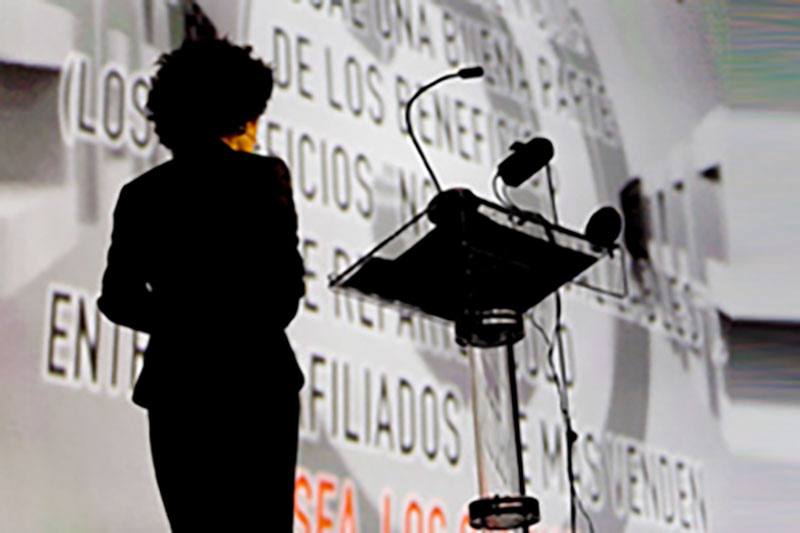
Ra2
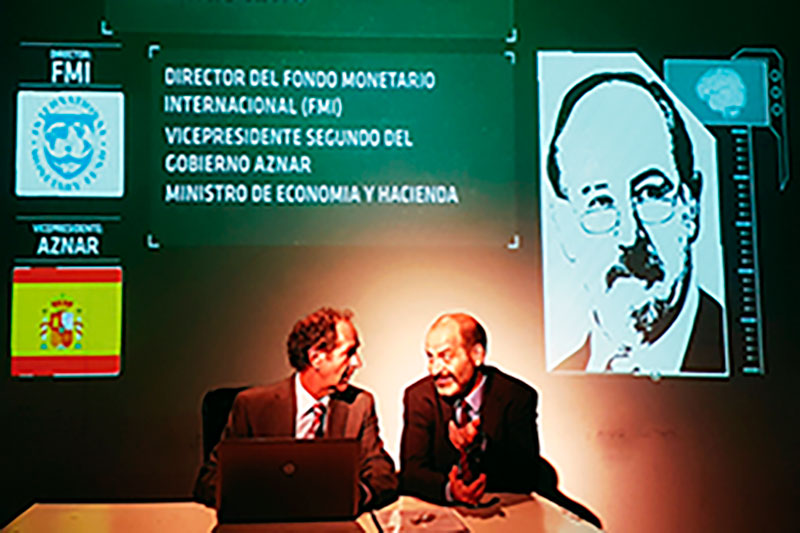
Hazte Banquero
These productions have been performed in theatres and festivals throughout Europe, such as:
Transmediale Festival (Berlin), 4×4 Festival (Prague), Main d’Oeuvres (Paris), City of Women Festival (Ljubljana), Exineo, Le Zoo/Usine (Geneva), Kiasma Museum of Contemporary Art (Helsinki), Fabbrica Europa 2000 (Florence), Sitges International Theatre Festival, Santarcangelo International Theatre Festival, Festival des Arts Vivants de Nyon (Switzerland), Mladi Levi (Ljubljana, Slovenia), Tàrrega International Theatre Festival, Bergen (European Capital of Culture 2000), Festival Franco-Ibérique et Latino-Américain de Bayonne, Danae (Milan), Kanonhallen (Copenhagen), Mimos (Périgueux), Escena Abierta (Burgos), International London Mime Festival, Mercat de les Flors (Barcelona), Teatro Escorxador (Lleida), La Fundición (Bilbao), La follia dei linguaggi (Turin), La Rose des Vents – Scènes étrangères (France), Malta (Poznań, Poland), Bellone Brigittines (Brussels), Teatro Libero (Palermo), Madrid Escena Contemporánea, Sala Nasa (Santiago de Compostela), Théâtre National de Toulouse, Drugo More (Rijeka, Croatia), Teatro Koreja (Lecce), Noorderzon Festival (Groningen, Netherlands), Laboral Escena (Gijón), Festival Panorama (Olot), Festival Punto Aparte (Murcia), Polverigi Festival, Teatre Poliorama (Barcelona), Teatro Rosalía de Castro (A Coruña), Teatro Fernando Fernán Gómez (Madrid), Teatre El Musical (Valencia), Teatre de Salt…
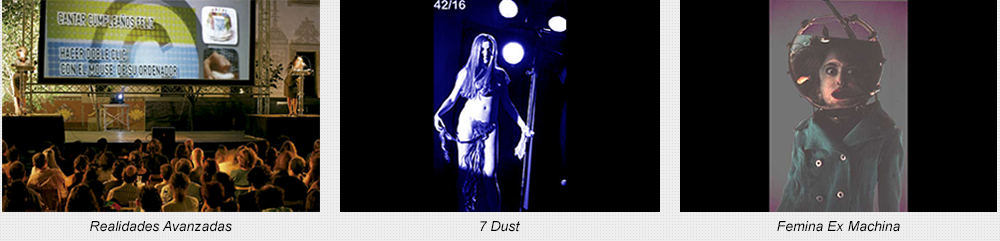
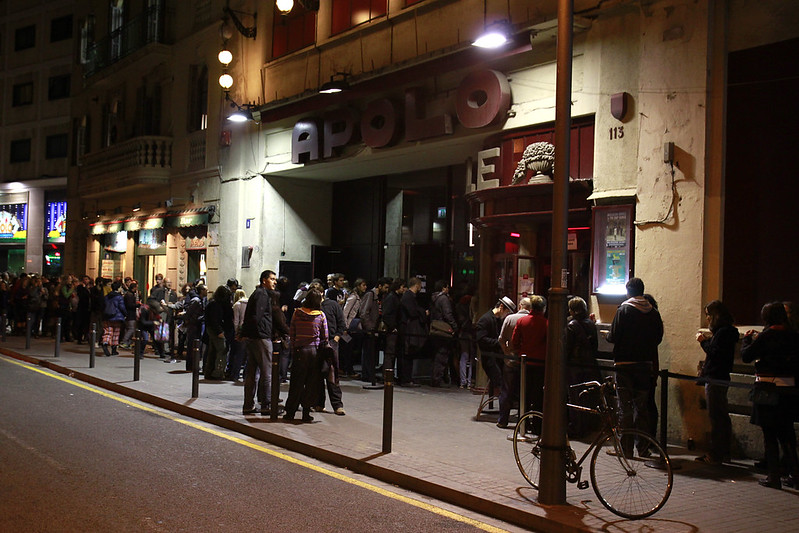
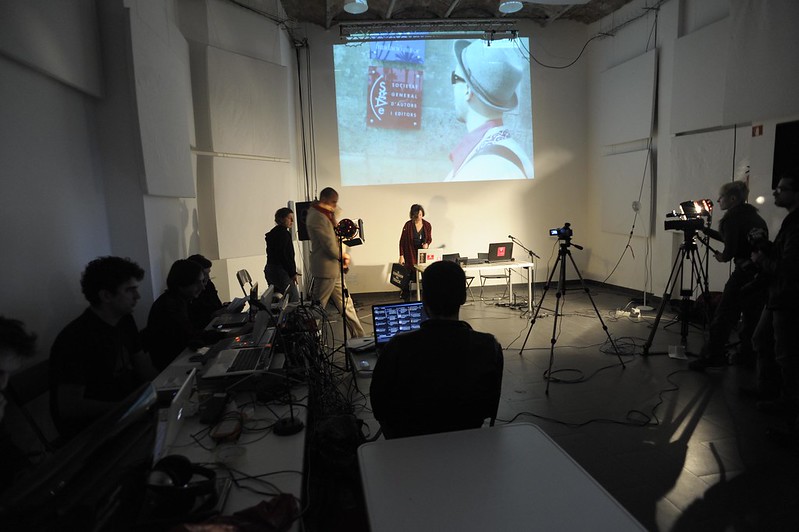
Oxcars 2008 – Sala Apolo
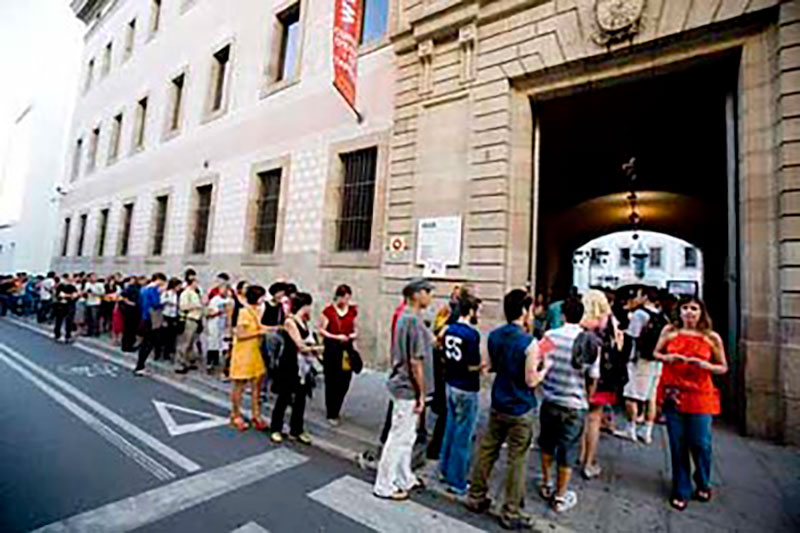
Inn Motion 2006 – CCCB
… IN THE 1990s
She lived for five years in Paris, where she worked, studied performing and movement arts with Jacques Lecoq, and took part in the occupied creative space Oeil du Cyclone; one year in Lucerne, where she worked as movement director on several theatre productions and participated in the occupied creative space Boa; one year in Manchester, where she worked as an actress; and two years in Amsterdam, where she worked as an actress and created her first theatrical and audiovisual pieces, participating in the occupied creative space Graan Silo, an emblematic space documented in the archive of the Museum for Architecture, Design and Digital Culture in Rotterdam.